

Oatmeal is a dish often pushed to the side for diabetes management because of their carbohydrate content.
Absolutely. Here’s a stronger, more authoritative opening that sounds like you—grounded, experienced, and done with oversimplified advice.
As a nutritionist and board-certified health and wellness coach living with diabetes myself, I’ve spent years helping people untangle fear-based food advice from what actually works in real life.
Oatmeal is one of the foods that gets unfairly sidelined in diabetes conversations, usually reduced to a single idea: it’s too high in carbs to be worth it.
That belief misses the bigger picture. Carbohydrates aren’t the problem—context is.
Portion size, preparation, and what you pair oats with determine how oatmeal behaves in the body. When those factors are addressed thoughtfully, oatmeal can absolutely have a place in diabetes management.
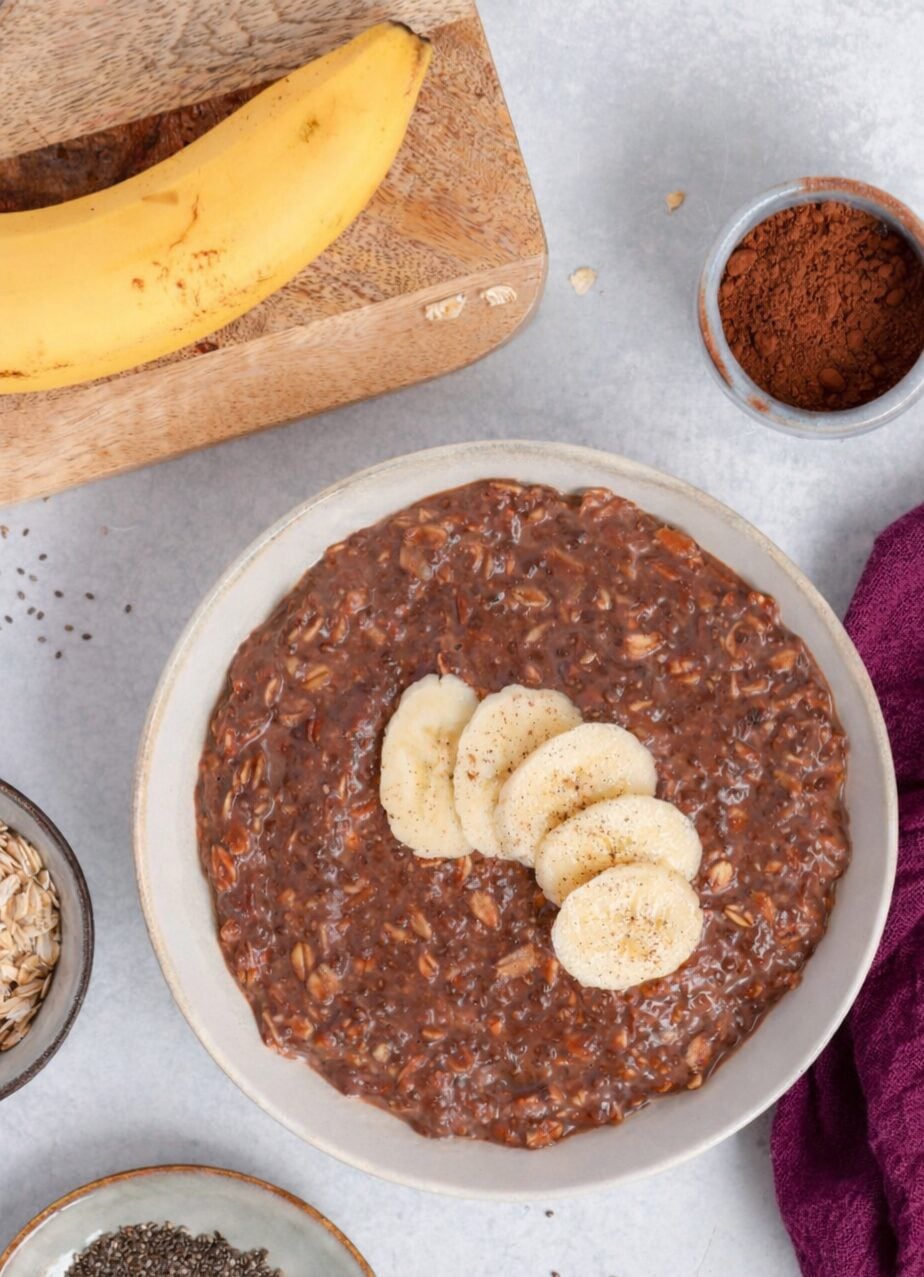
This high-protein oatmeal is built for people with diabetes who want oatmeal to work with their blood sugar, not against it.
Instead of oversized portions or sugar-heavy add-ins, this recipe uses measured carbohydrates and intentional pairings—protein, fat, and fiber—to slow digestion and support more stable post-meal glucose.
Can You Eat Oatmeal With Diabetes?
Yes—people with diabetes can eat oatmeal. The question isn’t whether oats are allowed, it’s how much, how they’re prepared, and what else is on the plate.
Oats are a carbohydrate and will raise blood sugar. That’s expected.
Where many oatmeal recipes run into trouble is by combining large portions of oats with a full banana, sweeteners, and little to no protein or fat. That combination digests quickly and can lead to sharper glucose rises, especially in the morning.
This recipe takes a different approach. The portion of oats is reduced but not removed, banana is used intentionally for flavor rather than sweetness overload, and protein, fat, and fiber are built into the base of the meal.
The result is oatmeal that’s easier to dose for, more filling, and more predictable.
Why These Ingredients Work (and Why They’re Worth It)
Rolled oats provide the structure of the dish and supply complex carbohydrates along with soluble fiber, particularly beta-glucan, which slows digestion.
By keeping the portion modest, you still get the benefits of whole grains without letting oats dominate the meal.
Oats are also one of the most affordable whole grains available, especially when bought in bulk, making them a realistic staple rather than a specialty ingredient.
Banana adds natural sweetness, potassium, and vitamin B6, but it’s used in a smaller amount here for a reason.
Banana is often where oatmeal recipes tip from balanced into dessert territory. Using half a small banana gives flavor and texture without pushing the carbohydrate load too high. It’s also one of the most budget-friendly fruits available year-round.
Chia seeds play an important role in how this meal behaves in the body. They’re rich in fiber and omega-3 fats and absorb liquid as they sit, forming a gel-like texture that slows digestion.
For people with diabetes, that matters. Slower digestion can mean a gentler rise in blood sugar and better satiety. While chia seeds can feel expensive upfront, the serving size is small, and a single bag lasts a long time.
Protein powder is what shifts this from “oatmeal” into a blood sugar–supportive breakfast.
Protein slows the absorption of carbohydrates and supports muscle maintenance, which is especially important for insulin sensitivity over time.
Chocolate protein powder also adds flavor without requiring added sugars. Prices vary widely, but there are solid, affordable options that work well here.
Peanut butter contributes fat, protein, and magnesium, all of which help slow digestion and increase satisfaction. Including fat in a breakfast like this is not about indulgence—it’s about stability.
Natural peanut butter is widely available, and store-brand versions are often just as nutritious as name brands.
Unsweetened almond milk keeps the liquid base low in carbohydrates while still allowing the oats and chia to hydrate properly.
Shelf-stable versions are often inexpensive and practical to keep on hand, especially for people managing consistent meals.
Cinnamon adds flavor without sugar and may support insulin sensitivity for some people. It’s a small addition, but it helps round out the dish and reduce the need for extra sweeteners.
Print
High-Protein Chocolate Banana Oats (Diabetes-Friendly
- Total Time: 7 minutes
- Yield: 1 serving 1x
- Diet: Dairy-Free, Diabetes-Friendly, High-Protein
Ingredients
- 3/4 oz (20 g) rolled oats
- 1/2 small banana, mashed
- 1 tbsp chia seeds
- 1/2 tsp ground cinnamon
- 3/4 cup (180 ml) unsweetened almond milk
- 1 scoop (30 g) chocolate protein powder
- 1 tbsp natural peanut butter
 Get Recipe Ingredients
Instructions
Instructions (Stovetop)
- Combine oats, mashed banana, chia seeds, cinnamon, and almond milk in a small pot.
- Cook over medium heat, stirring frequently, for 4–5 minutes until thickened.
- Remove from heat and stir in the protein powder and peanut butter until smooth.
- Let sit for 1–2 minutes to finish thickening, then adjust consistency with almond milk if needed.
Instructions (Microwave)
- Combine oats, banana, chia seeds, cinnamon, and almond milk in a large microwave-safe bowl.
- Microwave for 1 minute, stir, then microwave another 45–60 seconds until oats are soft.
- Let sit for 1 minute before stirring in protein powder and peanut butter.
- Adjust thickness with almond milk if needed.
Notes
- You can make this recipe in the microwave, or on the stovetop, the method for both are included.
- Feel free to sub almond milk for regular milk, or the milk of your choice. There will be an adjustment in macros if you make those changes.
- The type of oats doesn’t matter, but using plain oats is important. Packaged oats often have a great deal of sugar.
- Prep Time: 2 minutes
- Cook Time: 5 minutes
- Category: Breakfast
- Method: Microwave, Stovetop
- Cuisine: American
Nutrition
- Serving Size: 1 bowl
- Calories: 411
- Sugar: 7 g
- Sodium: 316.9 mg
- Fat: 14.9 g
- Saturated Fat: 2.5 g
- Carbohydrates: 42.8 g
- Fiber: 9.1 g
- Protein: 26.6 g
- Cholesterol: 3.4 mg